What the media won't tell you about falling home prices and what it actually means for Barrie buyers and sellers
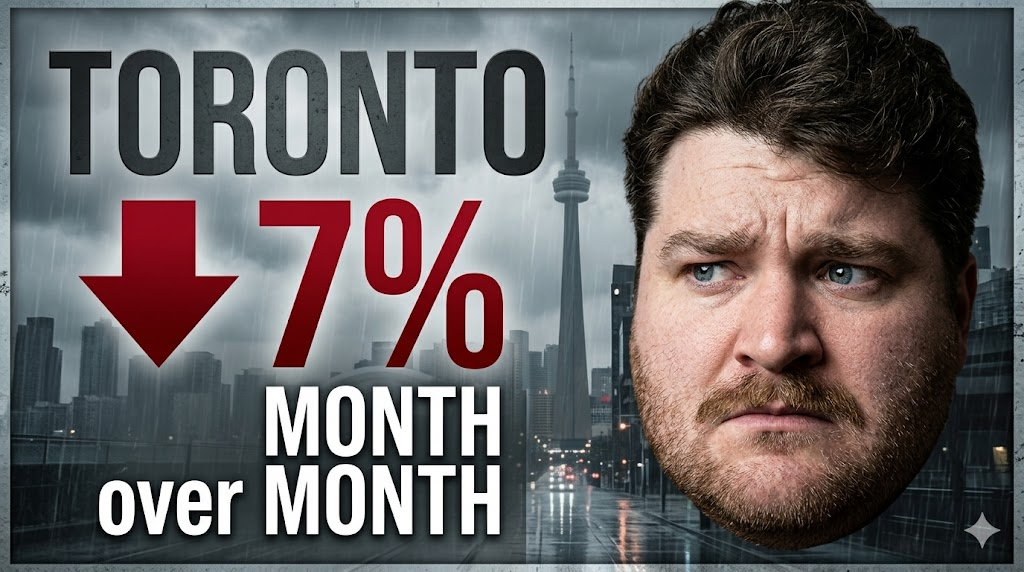
Toronto home prices are down 7% this February compared to last year, and according to the headlines, the housing market continues to tumble. It's the end of the world for everyone. Except it's not.
If you've been reading real estate news lately, you've probably seen article after article predicting doom and gloom for the housing market. But here's what most people don't understand: it's less about the article itself and more about how to read these articles critically. Let's break down what's actually happening versus what the media wants you to believe.
What the Toronto Star Article Actually Says
A recent Toronto Star article reported that Toronto area home prices continue to slip in February, marking year-over-year declines. According to the Toronto Real Estate Board (TREB), the latest report showed the average price of homes across the Greater Toronto Area was $1 million.
The immediate reaction? "Oh no, houses are falling!" But wait. The average sale price is still $1 million. For context, Barrie is sitting in the mid-$700s, possibly around $800k. So let's keep some perspective here.
The report shows prices are down about 7% from last February. TREB has reported year-over-year declines in the average selling price since February 2025, according to Chief Information Officer Jason Mercer.
The Problem with Real Estate Headlines: Context Matters
Presenting Stats vs. Adding "Flavour"
When articles simply present statistics, that's fine. We need data. But here's where it gets tricky. The article mentions "ongoing trade uncertainty with the US" as a factor in declining prices.
Does trade uncertainty with the US actually affect your average person day-to-day when they're looking at homes? It almost feels more like a buzzword inserted to help with search engine optimization. When people search for terms related to trade and economics, the article shows up. Smart for the publication, but is it actually relevant to whether you should buy or sell your home? Probably not as much as they're implying.
The Danger of "If" Statements
Here's a line from the article: "If we see the market conditions tighten up and we get a bit of a floor, that could be another factor that sees people move into the marketplace."
Be cautious anytime you see "if" in a real estate prediction. People all over the industry drop "ifs" and try to predict things. The problem? People put way more weight on these statements than they should. You never really know what's going to happen. One thing could occur, but an unexpected result might follow because of that cause.
The statement essentially says: "If prices stop falling, then things will get better because people will be more confident and prices might start trending upwards." Well, obviously. That's not insight, that's just restating cause and effect.
The Chart Nobody Wants You to Understand
When you look at average selling prices over time, the media focuses on comparing current prices to the February 2022 peak. They talk about how low prices are now. But look at the actual chart.
Each valley represents January, the slowest time of year for real estate. You see an increase come February, except for the outlier: February 2022, when everything exploded.
In comparison to that artificial peak, yes, prices are lower. But compared to almost 10 years ago? Prices are still significantly higher. Houses are worth more than they were a decade ago. They're in a solid spot.
The narrative makes it sound like doom and gloom. Yes, when the world went crazy during the pandemic, houses were doing great. Now they're not doing "as great." But "not doing as great" really just means they're back to where they normally should be. People are stuck in the delusion that the 2022 peak was normal. It wasn't. Get over it.
Breaking Down the Numbers by Property Type
Detached Homes
Average prices were down from February 2025 for detached homes by 8.2%. This is the category most people care about. The average price of a detached home in Toronto sits at $1.57 million, down about 11% from the February 2022 peak.
Again, comparing to February 2022 doesn't matter. That was an anomaly. For Pete's sake, move on.
Semi-Detached Homes
Semi-detached homes are down 5.8% year-over-year.
Townhouses
Townhouses dropped 7.2% compared to last February.
Condos: The Real Opportunity
Here's where it gets interesting, especially for Barrie and Simcoe County buyers. Condos, at least in Barrie, are a dumpster fire right now in terms of pricing. If you're looking for something inexpensive to get into the market, get into a condo.
The market will turn eventually on condos, but right now prices are very low. This creates opportunities for first-time buyers who have been priced out of detached homes.
Seasonal Market Patterns: Why January and February Matter
The article mentions that average prices increased slightly from last month. Of course they did. That's what we normally see this time of year. January is typically a very slow period for real estate.
Why? Because people aren't pricing their houses properly during the holidays, and buyer activity naturally slows down. We still had a decent number of sales in Barrie. If houses are priced properly, they're moving.
The article noted it was apparently the first increase in average monthly sale price since September 2025. Well, yeah, because you get into Christmas and holidays and that sort of thing. Stuff kind of tapers down. This is normal seasonal fluctuation, not a sign of market recovery or collapse.
What This Means for Barrie and Simcoe County
A lot of the time, what you see happen in places like Toronto will be reflected in smaller areas like Barrie and Simcoe County. But the timeline and magnitude can be different.
For Barrie buyers and sellers, here's what matters:
- Don't make decisions based on GTA headlines and Toronto-specific data
- Your local market conditions are what affect your property value and buying power
- Properties priced properly in Barrie are still selling, even in winter
- First-time buyers have opportunities in the condo market that didn't exist a year ago
- Seasonal patterns are normal and predictable
How to Read Real Estate Articles Like a Pro
1. Always Check the Baseline
When an article says prices are "down," ask yourself: down from what? If they're comparing to the 2022 peak, that's not a useful comparison. Look for longer-term trends over 5-10 years.
2. Ignore Predictive "If" Statements
Any sentence that starts with "if the market does X, then Y will happen" is speculation. It might be educated speculation, but it's not fact. Don't base major financial decisions on hypotheticals.
3. Question the Buzzwords
Terms like "trade uncertainty," "economic headwinds," and "market volatility" sound important. But ask yourself: does this actually affect whether I should buy or sell my specific home in my specific neighbourhood right now?
4. Understand Seasonal Patterns
Real estate has predictable seasonal cycles. January is slow. Spring picks up. Summer is active. Fall slows down. December is dead. Articles that treat normal seasonal changes as breaking news are sensationalizing.
5. Cross-Reference Local Data
Toronto data doesn't tell you what's happening in Barrie, Innisfil, or rural Simcoe County. Always verify with local market statistics and a realtor who knows your specific area.
6. Use Your Brain
This is the most important one. Think critically about what you're reading. A lot of these articles are sensationalized and maybe just not 100% honest. They're honest in the stats they provide, but context behind the stats means a lot.
The Bottom Line: Things Are Actually Normal
Things aren't on fire. Who knew? Things are actually just kind of normal, and people are stuck thinking the 2022 market was the new baseline. It wasn't.
The Barrie and Simcoe County real estate market is functioning. Buyers who are realistic about pricing and prepared with financing are finding properties. Sellers who price competitively and present their homes well are getting offers. That's a normal, healthy market.
Yes, it's different from 2022 when anything listed would sell for over asking in a bidding war. But 2022 was abnormal. What we have now is closer to what a sustainable real estate market should look like.
What You Should Actually Do
Instead of panicking over headlines or waiting for the "perfect" market conditions that will never come, here's what makes sense:
For Buyers:
- Get pre-approved to understand your actual buying power
- Focus on local Barrie and Simcoe County inventory, not GTA headlines
- Consider the condo market if you're a first-time buyer looking for affordability
- Work with a realtor who knows current local market conditions
- Make decisions based on your life needs and financial readiness, not fear of missing out or fear of catching a falling knife
For Sellers:
- Price your property based on recent comparable sales in your specific neighbourhood
- Don't list based on what your neighbour's house sold for in 2022
- Present your home well - staging and photos matter more in a balanced market
- Be realistic about timing - if you list in January, expect slower activity than spring
- Work with a realtor who will give you honest pricing advice, not just tell you what you want to hear
Final Thoughts: Don't Let Media Drive Your Decisions
Real estate journalism serves a purpose. We need data. We need market analysis. But we also need to recognize that media outlets are businesses that benefit from clicks, and sensational headlines get more clicks than "Market Continues to Function Normally."
Always make sure you're not blindly reading these articles. Double-check. Cross-reference. Talk to a realtor you trust. Use your brain.
The Toronto market being down 7% doesn't mean you should panic. It doesn't mean you should rush to buy. It doesn't mean you should avoid selling. It means you should understand your local market, your personal financial situation, and make informed decisions based on facts, not fear.
Things are fine. The market is fine. It's just normal. And normal is actually pretty good.
Need Help Understanding Your Local Market?
If you want to know what's actually happening in your specific Barrie or Simcoe County neighbourhood - not what's happening in Toronto, not what headlines are saying, but real local data - reach out to Team Keogh.
We provide weekly market updates for Barrie, honest pricing advice, and context that helps you make informed real estate decisions without the media sensationalism.